Frontend API Routing
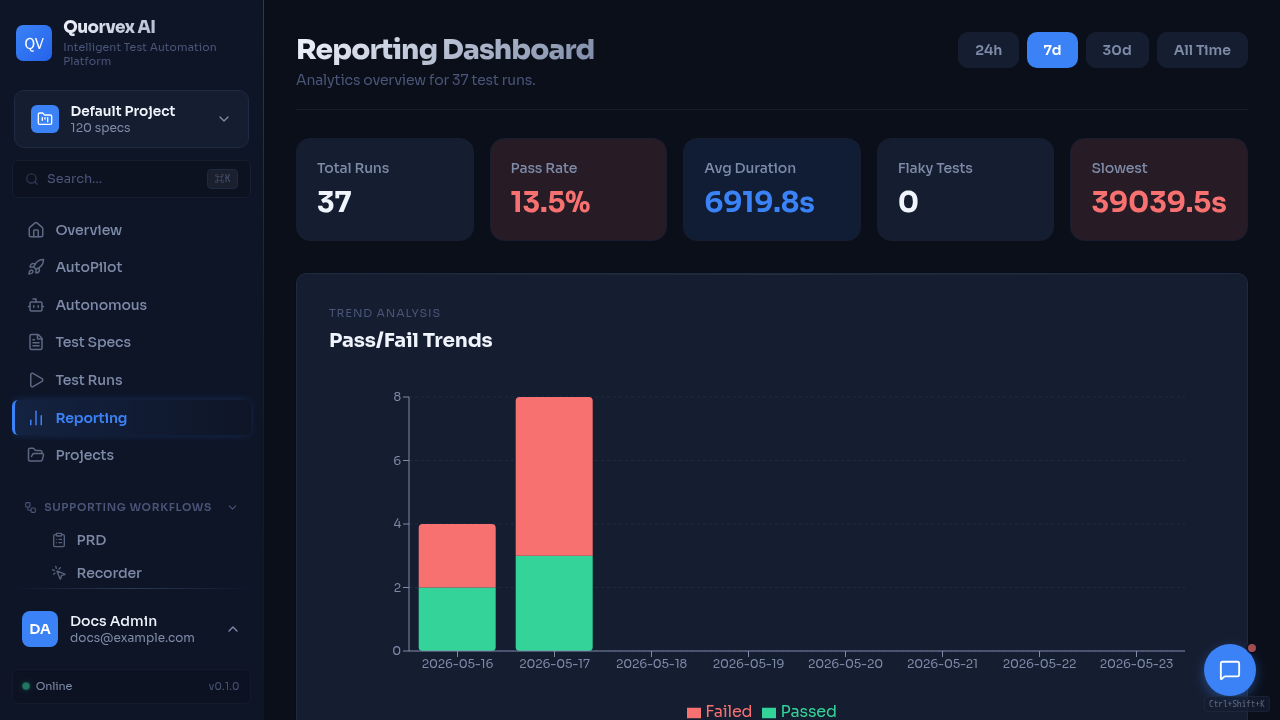
Dashboard overview showing frontend API routing context.
Reference for dashboard-to-backend URL resolution and proxy behavior.
Browser API Base
web/src/lib/api.ts exports API_BASE and apiUrl().
| Runtime condition | API base |
|---|---|
NEXT_PUBLIC_API_URL is set and browser host is local | NEXT_PUBLIC_API_URL |
Browser host is localhost or 127.0.0.1 and no env override is set | http://localhost:8001 |
| Browser host is not local and env points to localhost or is unset | /backend-proxy |
| Browser host is not local and env points to a non-local backend | NEXT_PUBLIC_API_URL |
Use apiUrl(path) or API_BASE from web/src/lib/api.ts in browser components. Do not hard-code http://localhost:8001 in dashboard pages.
Backend Proxy
web/src/app/backend-proxy/[...path]/route.ts proxies browser requests from /backend-proxy/* to the backend.
| Behavior | Details |
|---|---|
| Target backend | INTERNAL_API_URL, then NEXT_PUBLIC_API_URL, then http://localhost:8001 |
| Methods | GET, POST, PUT, DELETE, PATCH, OPTIONS |
| Query strings | Preserved |
| Request body | Forwarded for non-GET and non-HEAD requests |
| Hop-by-hop headers | Removed before forwarding |
| Timeout | BACKEND_PROXY_TIMEOUT_MS, then API_TIMEOUT_MS, then 620000 ms; applies to the fetch abort, Undici header timeout, and Undici body timeout |
The proxy exists so deployed dashboards do not send browser traffic to a localhost backend that only exists inside the server environment.
For company nginx deployments, leave QUORVEX_PUBLIC_API_URL and NEXT_PUBLIC_API_URL blank. Browser requests then use same-origin /backend-proxy, while the Next.js container routes those requests to INTERNAL_API_URL=http://backend:8001 inside Compose.
Server-Side Backend Client
web/src/lib/ai/backend-client.ts is for Next.js server routes.
| Option | Purpose |
|---|---|
method | HTTP method |
body | JSON request body |
headers | Extra headers |
authToken | Bearer token forwarded to FastAPI |
projectId | Project context header |
timeoutMs | Abort timeout |
Server routes should prefer backendFetch() because it resolves INTERNAL_API_URL and returns structured success/error data.
Authenticated Browser Requests
Use fetchWithAuth from web/src/contexts/AuthContext.tsx for browser requests that may require authentication.
fetchWithAuth:
- attaches the current access token when present
- retries once after a successful refresh on
401 - uses the shared refresh mutex
- returns the final
Responseobject
getAuthHeaders() in web/src/lib/styles.ts is retained for older inline-style pages, but it reads localStorage.auth_token. The current auth runtime keeps the access token in module memory and persists only the refresh token, so prefer fetchWithAuth() for new pages and for any page that is already being substantially updated.
Environment Variables
| Variable | Used by | Purpose |
|---|---|---|
NEXT_PUBLIC_API_URL | Browser and server code | Public backend URL override |
INTERNAL_API_URL | Next.js server routes and backend proxy | Server-side backend URL, usually Docker service or internal network address |